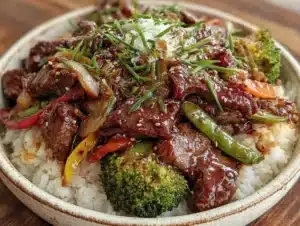
Let’s face it: the word “stir fry” often conjures images of steamed broccoli and bland, watery sauce clinging to soggy noodles. You know the type. It’s healthy, sure, but it lacks soul. I used to think that was just the cost of eating dinner on a weeknight. That changed the night I decided to stop playing it safe with my skillet. I was staring into a cast-iron pan, feeling that familiar midweek slump, when I realized my dinner needed a spark. Not just heat, but actual brightness. That’s when I created the One-Skillet Cowboy Stir Fry – Bold Flavor.
This isn’t your average Tuesday meal. It’s a collision of rugged, smoky beef and vibrant, zesty veggies that wakes up your taste buds. Honestly, the smell of searing steak hitting hot oil with a splash of citrus is the best part of my day. It reminds me of camping trips, but without the bug bites or the long drive. It’s comfort food with a punch. And let’s be real, we all need a little more punch in our lives right now.
I’ve tested this cowboy stir fry recipe over a dozen times. Some versions were too sweet, others too salty. But this one? This one hits that sweet spot where rich meets bright, and bright wins the last bite. It’s perfect for busy families who want something hearty but not heavy. It’s great for meal prep, too, because the flavors actually get better the next day. If you’re tired of boring dinners, trust me, this one is worth the ten minutes it takes to chop vegetables.
The beauty of this One-Skillet Cowboy Stir Fry – Bold Flavor is its simplicity. You don’t need a pantry full of exotic spices. Just good beef, fresh produce, and a few bold ingredients you probably already have. It’s rustic, it’s delicious, and it’s incredibly satisfying. Once you take that first bite, you’ll understand why I keep coming back to this skillet. It’s not just food; it’s a mood lifter.
Why You’ll Love This Recipe
There’s a reason this recipe has become a staple in my kitchen rotation. It’s not just about the convenience of using one pan, though that’s a huge plus. It’s about the flavor profile that defies the typical stir-fry stereotype. Most people assume “healthy” or “quick” means sacrificing taste. This recipe proves them wrong. It delivers a complex, layered flavor that feels like it came from a high-end restaurant, but it’s made with humble, everyday ingredients.
- Quick & Easy: This cowboy stir fry comes together in under 20 minutes. From chopping to cleaning up, you’re done in the time it takes to order takeout. It’s perfect for those chaotic weeknights when you’re hungry but exhausted.
- Simple Ingredients: You likely have most of these items in your fridge and pantry right now. No need for a special grocery run. Just grab some beef, bell peppers, onions, and your favorite zesty sauce ingredients.
- Perfect for Meal Prep: Because the bold flavors hold up well, this dish is ideal for lunch the next day. The sauce thickens and coats the ingredients even better after resting in the fridge.
- Crowd-Pleaser: Even the pickiest eaters at my table ask for seconds. The savory beef appeals to adults, while the sweet-tangy sauce keeps the kids engaged. It’s a rare win-win.
- Unbelievably Delicious: The texture is key here. You get the crunch of fresh veggies, the chew of tender beef, and the sticky gloss of the sauce. It’s next-level comfort food that doesn’t leave you feeling sluggish.
What makes this recipe different is the finishing touch. Most stir-fries rely on soy sauce and sugar. This one uses a splash of citrus and a hint of vinegar to cut through the richness of the meat. It creates a balance that’s incredibly refreshing. It’s not just good; it’s the kind of meal that makes you close your eyes after the first bite and sigh. It’s comfort food reimagined—healthier, faster, but with the same soul-soothing satisfaction. Plus, if you want to add some heat, you can easily swap in some jalapeños or red pepper flakes. It’s versatile enough to fit your mood.
What Ingredients You Will Need
This recipe uses simple, wholesome ingredients to deliver bold flavor and satisfying texture without the fuss. The magic lies in the combination of high-quality protein and fresh, crisp vegetables. We aren’t using processed meats here; just real beef and real produce. The sauce is the star, though, tying everything together with a zesty kick that keeps the dish from feeling heavy.
- Beef Sirloin or Flank Steak (1.5 lbs): Choose a lean cut that sears well. I prefer sirloin for its balance of tenderness and flavor. Slice it thinly against the grain for the best texture.
- Tip: If you can’t find flank steak, skirt steak works too, but it needs careful slicing.
- Yellow Onion (1 large): Provides a sweet, aromatic base. Yellow onions are versatile and caramelize beautifully in the skillet.
- Tip: Dice them into half-inch pieces so they cook evenly with the beef.
- Red Bell Pepper (2 medium): Adds a pop of color and a slightly sweet, crisp crunch. Red peppers are sweeter than green ones, which balances the savory beef.
- Tip: Remove the seeds and white membranes to ensure no bitterness.
- Green Bell Pepper (1 medium): Offers a sharper, earthier flavor that contrasts with the red pepper. It adds necessary structural integrity to the stir-fry.
- Tip: Don’t skip this; it provides the “bite” in the texture.
- Garlic (4 cloves): Fresh garlic is non-negotiable. It brings the aromatic depth that makes the dish smell amazing.
- Tip: Minced finely so it doesn’t burn quickly in the hot pan.
- Fresh Ginger (1 tbsp): Grated fresh ginger adds a warm, spicy note that cuts through the fat of the beef.
- Tip: Use a microplane for the smoothest texture. Avoid pre-minced jarred ginger if you can help it.
- Soy Sauce (1/4 cup): Use a low-sodium version to control the saltiness. It provides the umami backbone of the sauce.
- Tip: I recommend Kikkoman or a similar brand for consistent quality.
- Apple Cider Vinegar (2 tbsp): This is the secret weapon. It adds acidity and brightness that wakes up the rich flavors.
- Tip: Don’t be afraid of the vinegar; it cooks off the harshness and leaves a tangy finish.
- Honey or Brown Sugar (2 tbsp): Balances the acidity and salt. Honey adds a floral note, while brown sugar adds molasses depth.
- Tip: Adjust based on your sweetness preference. I like a 50/50 mix.
- Cornstarch (1 tbsp): Used to coat the beef and thicken the sauce. It creates that glossy, restaurant-style finish.
- Tip: Mix it with a little water to create a slurry for the sauce if needed.
- Vegetable Oil (2 tbsp): High smoke point oil is essential for searing the beef without burning.
- Tip: Avocado oil is a great alternative if you prefer a neutral flavor.
- Red Pepper Flakes (1/2 tsp): Optional, but highly recommended for a little kick. It adds warmth without overwhelming heat.
- Tip: Start with 1/4 tsp if you are sensitive to spice.
Equipment Needed
You really only need one major piece of equipment for this recipe, which is why I love it so much. A large skillet or cast-iron pan is your best friend here. I use a 12-inch cast-iron skillet because it holds heat incredibly well. That consistent heat is crucial for getting a good sear on the beef without steaming it. If you don’t have cast iron, a heavy-bottomed stainless steel skillet works just as well. Avoid non-stick coatings if you want that crispy edge on the meat, though they are easier to clean.
You’ll also need a sharp chef’s knife and a cutting board. Sharp knives are safer and make prep faster. A dull knife will crush your bell peppers instead of slicing them, which can lead to uneven cooking. A large spatula or wooden spoon is needed for stirring. I prefer a wide spatula because it allows me to flip the beef in large batches without breaking it up too much.
For measuring, have your spoons and cups ready. Having everything measured out before you start cooking (mise en place) prevents burning. You don’t want to be fumbling for soy sauce while your garlic is sizzling. A small bowl for mixing the sauce ingredients is also helpful. Keep it simple, and you’ll be eating in no time.
Preparation Method
Start by preparing your ingredients. Slice the beef against the grain into thin strips. This step is critical for tenderness. If you slice with the grain, the meat will be chewy and tough. Place the beef in a bowl and toss it with 1 tablespoon of cornstarch and a pinch of salt. Let it sit for 10 minutes while you chop the vegetables. This coating helps create a crust when it hits the pan.
While the beef rests, dice the onions and bell peppers into uniform pieces. Aim for half-inch chunks so they cook at the same rate as the beef. Mince the garlic and grate the ginger. In a small bowl, whisk together the soy sauce, apple cider vinegar, honey, remaining cornstarch, and red pepper flakes. Set this sauce aside. Having it ready means you can focus on the cooking process without interruptions.
Step 1: Sear the Beef (5 minutes)
Heat your large skillet over medium-high heat. Add 1 tablespoon of vegetable oil. Once the oil shimmers, add the beef in a single layer. Do not overcrowd the pan; cook in batches if necessary. Overcrowding steams the meat instead of searing it. Let the beef cook undisturbed for 2-3 minutes until a brown crust forms. Flip and cook for another minute. Remove the beef from the pan and set it aside on a plate. Do not clean the pan; that browned bits are flavor gold.
Step 2: Sauté the Vegetables (4 minutes)
Add the remaining tablespoon of oil to the same skillet. Toss in the onions and bell peppers. Stir frequently to prevent burning. Cook for about 3-4 minutes until the vegetables are tender-crisp. They should still have a bit of bite to them. Add the garlic and ginger during the last minute of cooking. Stir constantly to release their aromas without letting the garlic burn. Burnt garlic tastes bitter and ruins the dish.
Step 3: Combine and Sauce (3 minutes)
Return the cooked beef to the skillet with the vegetables. Give the sauce a quick stir, as the cornstarch may have settled. Pour the sauce over the beef and vegetable mixture. Toss everything together gently. The sauce will thicken rapidly, within about 30-60 seconds. Cook for another minute to ensure the sauce coats everything evenly and the flavors meld together. If the sauce looks too thick, add a splash of water. If it’s too thin, let it cook for another minute.
Step 4: Final Touches and Serving (2 minutes)
Taste the stir-fry. Add more salt or pepper if needed. If you want extra heat, add more red pepper flakes. Remove from heat immediately. Overcooking the vegetables will make them mushy. Serve hot, garnished with sliced green onions or sesame seeds if you like. Enjoy your bold, zesty dinner!
Cooking Tips & Techniques
One of the biggest mistakes people make with stir-fry is overcrowding the pan. I learned this the hard way early on. When you pack too much meat into the skillet, the temperature drops, and the meat releases moisture. Instead of searing, it boils in its own juices. This results in gray, tough beef. Always cook in batches if you’re making a large portion. It takes an extra minute, but the difference in texture is night and day.
Another key technique is the “against the grain” rule for slicing beef. Look at the direction of the muscle fibers. Cut perpendicular to them. This shortens the fibers, making each bite tender. If you cut parallel, you’ll be chewing for a while. It’s a simple step that elevates the entire dish. Also, ensure your beef is patted dry before seasoning. Excess moisture prevents browning.
For the vegetables, timing is everything. Bell peppers and onions have different water contents. Start with the onions if they are larger, as they take longer to soften. Add the peppers later to keep them crisp. I once overcooked my peppers until they were sad, limp strips. Never again. Aim for “tender-crisp,” where they are cooked through but still snap when you bite them.
Multitasking is essential in stir-fry cooking. While the beef sears, have your sauce whisked and ready. While the veggies sauté, have your garnishes chopped. This flow keeps you calm and prevents burning. Keep your heat at medium-high throughout. You want that sizzle sound. If the pan is smoking excessively, lower the heat slightly, but don’t drop it too low. Consistent heat is the secret to that restaurant-quality char.
Variations & Adaptations
This recipe is a canvas for your creativity. Here are a few ways to make it your own:
- Spicy Kick: Add fresh sliced jalapeños or a tablespoon of sriracha to the sauce. If you like heat, this variation turns the stir-fry into a fiery delight. It pairs well with the sweet honey.
- Veggie Boost: Throw in some broccoli florets or snap peas. Broccoli needs a minute or two longer to cook, so add it with the onions. Snap peas are delicate, so add them at the very end. This adds more nutrients and crunch.
- Gluten-Free Option: Swap regular soy sauce for tamari. Ensure your cornstarch is certified gluten-free if you have celiac disease. The flavor remains nearly identical.
- Protein Swap: While beef is classic, you can use chicken breast or shrimp. Chicken needs to be cut into bite-sized pieces and cooked slightly longer. Shrimp cooks very fast, so add it at the end with the sauce. It’s a lighter option but still bold.
- My Personal Twist: I sometimes add a handful of fresh cilantro at the very end. The fresh herb adds a bright, citrusy note that complements the apple cider vinegar perfectly. It’s a game-changer for freshness.
Serving & Storage Suggestions
Serve this cowboy stir fry hot, straight from the skillet. It looks rustic and inviting. I like to garnish it with sliced green onions for a pop of green and a bit of oniony bite. Sesame seeds add a nice nutty texture. Pair it with steamed jasmine rice or cauliflower rice for a low-carb option. The sauce is perfect for soaking up with rice.
For leftovers, store the stir-fry in an airtight container in the refrigerator for up to 3 days. The flavors continue to develop, so it often tastes even better on day two. To reheat, use a skillet over medium heat with a splash of water to loosen the sauce. Microwaving can make the vegetables soggy, so the skillet method is best for preserving texture. If you’re meal prepping, portion it out into containers with rice for a quick lunch.
This dish freezes well, too. Place it in a freezer-safe container for up to 3 months. Thaw in the fridge overnight and reheat as described. The beef may be slightly softer after freezing, but the flavor remains intact. It’s a great option for busy weeks when you want a home-cooked feel without the effort.
Nutritional Information & Benefits
This One-Skillet Cowboy Stir Fry – Bold Flavor is a balanced meal. The beef provides high-quality protein and iron, which are essential for energy and muscle repair. The bell peppers are packed with Vitamin C, boosting your immune system. Onions contain quercetin, an antioxidant that supports heart health. Using lean cuts of beef keeps the saturated fat lower, making it a heart-friendly choice.
Per serving (approx. 1.5 cups), there are roughly 350-400 calories, depending on the beef fat content and sauce amount. It’s rich in protein (around 30g) and moderate in carbs (around 20g). The fiber from the vegetables aids digestion. This dish is naturally gluten-free if you use tamari. It’s also dairy-free, making it suitable for many dietary restrictions. I love that it feels indulgent but is actually quite nourishing. It’s a meal that fuels you without weighing you down.
Conclusion
There you have it: the One-Skillet Cowboy Stir Fry – Bold Flavor. It’s easy, it’s delicious, and it’s packed with zesty brightness. I hope you try it out and make it your own. Feel free to adjust the spice level or swap in your favorite veggies. Cooking should be fun and flexible, not rigid. This recipe is a foundation for creativity.
I’d love to hear how it turns out for you. Did you add extra heat? Did you use chicken instead? Leave a comment below and share your adaptations. Tag me on social media if you post a photo—I always love seeing your kitchen creations. Thanks for reading, and happy cooking! Here’s to more bold, bright dinners.
FAQs
Can I use frozen vegetables?
Yes, you can, but fresh vegetables provide better texture. If you use frozen, thaw and drain them well to avoid a watery stir-fry. Add them later in the cooking process to prevent mushiness.
What cuts of beef work best?
Sirloin, flank steak, and skirt steak are ideal. They are tender and sear well. Avoid tougher cuts like chuck roast unless you slow cook them first. Always slice against the grain.
How do I make the sauce thicker?
Ensure your cornstarch is fully dissolved in the liquid before adding it to the pan. If it’s still thin, let it cook for another minute. You can also make a separate slurry of cornstarch and water to add if needed.
Can I make this in an air fryer?
While possible, a skillet gives the best sear. If using an air fryer, cook the beef and veggies separately to ensure even cooking. Toss with sauce at the end. It won’t have the same wok hei flavor, though.
Is this recipe spicy?
It’s mildly spicy from the red pepper flakes, but you can control the heat. Omit the flakes for a mild version, or add fresh chilies for extra kick. The honey balances the spice nicely.
Pin This Recipe!
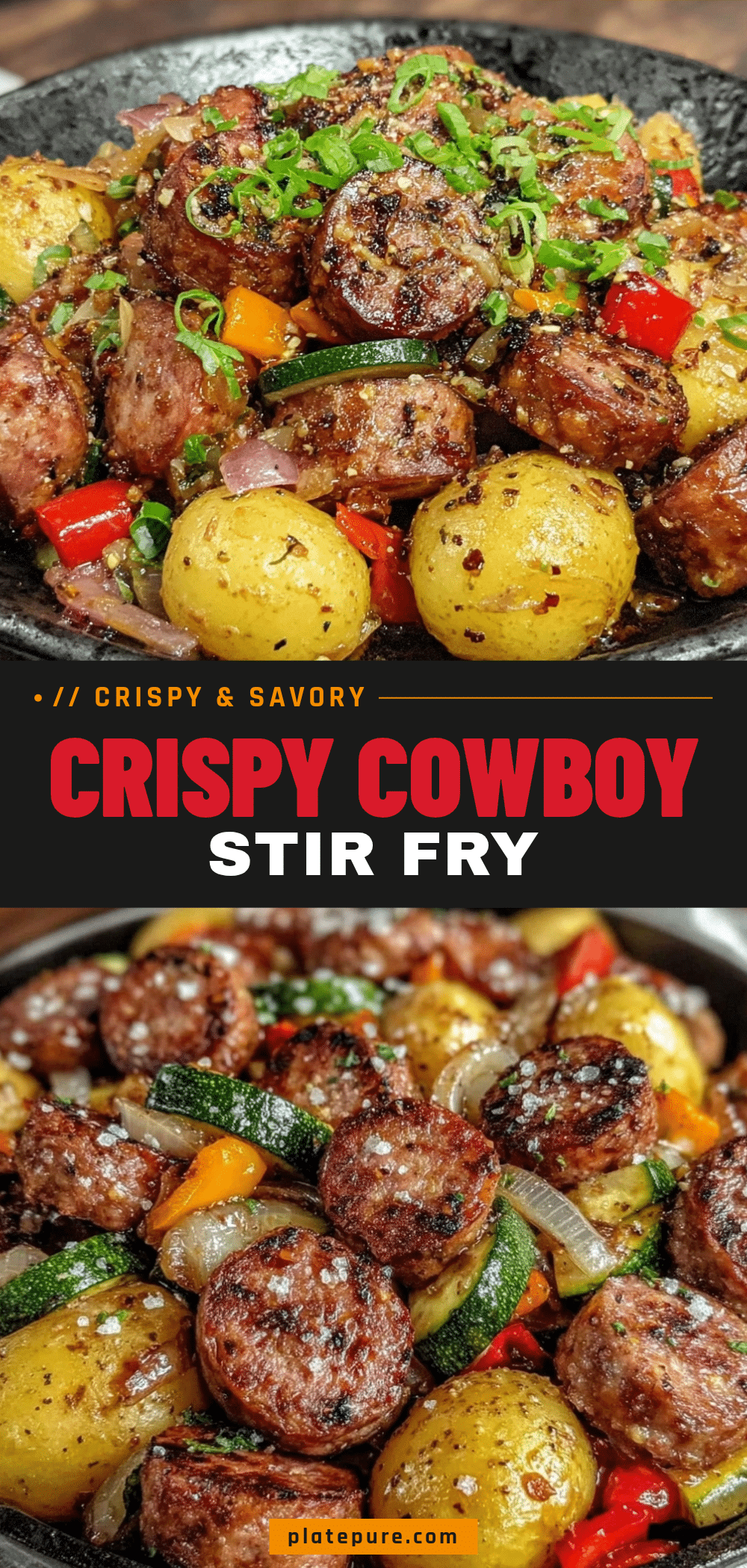

One-Skillet Cowboy Stir Fry: Easy Zesty Skillet Dinner
- Total Time: 20 minutes
- Yield: 4 servings 1x
Description
A bold, zesty stir-fry featuring seared beef sirloin and crisp bell peppers in a tangy honey-soy sauce, cooked quickly in a single skillet for a flavorful weeknight meal.
Ingredients
- 1.5 lbs Beef Sirloin or Flank Steak, sliced thinly against the grain
- 1 large Yellow Onion, diced into half-inch pieces
- 2 medium Red Bell Peppers, seeded and chopped
- 1 medium Green Bell Pepper, chopped
- 4 cloves Garlic, minced
- 1 tbsp Fresh Ginger, grated
- 1/4 cup Soy Sauce (low-sodium recommended)
- 2 tbsp Apple Cider Vinegar
- 2 tbsp Honey or Brown Sugar
- 1 tbsp Cornstarch
- 2 tbsp Vegetable Oil (divided)
- 1/2 tsp Red Pepper Flakes (optional)
Instructions
- Slice the beef against the grain and toss with 1 tablespoon of cornstarch and a pinch of salt. Let sit for 10 minutes.
- Dice onions and bell peppers. Mince garlic and grate ginger.
- In a small bowl, whisk together soy sauce, apple cider vinegar, honey, remaining cornstarch, and red pepper flakes. Set aside.
- Heat a large skillet over medium-high heat with 1 tablespoon of oil. Sear beef in batches for 2-3 minutes per side until browned. Remove beef and set aside.
- Add remaining 1 tablespoon of oil to the skillet. Sauté onions and bell peppers for 3-4 minutes until tender-crisp.
- Add garlic and ginger during the last minute of cooking, stirring constantly.
- Return beef to the skillet. Pour sauce over the mixture and toss gently until the sauce thickens and coats everything, about 1 minute.
- Taste and adjust seasoning. Serve hot, garnished with green onions or sesame seeds if desired.
Notes
Slice beef against the grain for tenderness. Do not overcrowd the pan when searing beef to ensure a good crust. Cook vegetables until tender-crisp to maintain texture. The dish can be made gluten-free by swapping soy sauce for tamari.
- Prep Time: 10 minutes
- Cook Time: 10 minutes
- Category: Main Course
- Cuisine: American
Nutrition
- Serving Size: Approx. 1.5 cups per
- Calories: 375
- Sugar: 12
- Sodium: 600
- Fat: 15
- Saturated Fat: 4
- Carbohydrates: 20
- Fiber: 3
- Protein: 30
Keywords: stir fry, cowboy stir fry, one skillet dinner, beef stir fry, quick weeknight meals, zesty beef, healthy dinner, meal prep